What is a leg extension

The leg extension is a resistance weight training exercise that targets the quadriceps muscle,which are located in the front of the thigh. It specifically isolates and strengthens the quadriceps by extending the knee joint against resistance. The leg extension exercise typically involves the use of a dedicated leg extension machine found in most gyms, although variations can be performed using resistance bands or other equipment. The leg extension is an isolated exercise targeting one specific muscle group, the quadriceps. It should not be considered as a total leg workout, such as the squat or deadlift.
The exercise consists of bending the leg at the knee and extending the legs, then lowering them back to the original position.
The leg extension is a good exercise for isolating muscular contraction in the quadriceps, but as with all isolation exercises, should be included in a holistic resistance training program working all muscles, especially antagonistic muscle pairs (such as the quadriceps, hamstrings, and gluteal muscles), to avoid muscular imbalances, which are associated with increased injury risk.
What are the Benefits of the Leg Extension?
The leg extension’s primary benefits are reinforcement of the patellar joint and its surrounding tissues (up to a point) by way of improved mobility and hypertrophic effect. Besides, it also have the following benefits:- Develop Quadriceps
- Improve muscle balance and aesthetics
- Contribute to Joint stability,
- Good for rehabilitation and injury prevention
- Enhances athletic performance
What Muscles are Worked by the Leg Extension?

Leg extensions are an isolation exercise, primarily targets the muscles of the quadriceps, which are located in the front of the thigh rather than engaging multiple muscle groups simultaneously.
Four quadriceps muscles work together during leg extensions to extend the knee joint, which involves straightening the leg. The exercise primarily targets the anterior (front) muscles of the thigh, helping to strengthen and develop the quadriceps. The main muscles worked during leg extensions include: Rectus Femoris, Vastus Lateralis, Vastus Medialis, Vastus Intermedius.
While the leg extension exercise primarily focuses on the quadriceps, it may also involve some activation of the hip flexors, such as the iliopsoas, due to their involvement in assisting knee extension. For a well-rounded leg workout, it is beneficial to include other exercises that target different leg muscles, such as squats, lunges, and hamstring exercises, to ensure overall lower body strength and balance.
What is a leg curl
Now let’s discuss the opposite of leg extension, which is the leg curl.The leg curl is a machine-based exercise that targets the muscles of the hamstring group. It is performed to stimulate muscle growth and strength in the hamstrings, with the glutes and calves providing support.
The leg curl can be done in a seated or lying position, depending on personal preference and available equipment. Both variations are typically performed with a moderate intensity, similar to the leg extension exercise.
This exercise is commonly used as a supplemental or complementary movement to improve the flexibility and development of the posterior chain during a workout session, without causing excessive fatigue or risking injury.
Variations of the Leg Curl

Relative Angle of Resistance:
In the seated leg curl, the angle of resistance is typically more perpendicular to the direction of leg movement. This means that the resistance is applied more directly against the movement of knee flexion. While in the lying leg curl, the angle of resistance is more parallel to the direction of leg movement. This means that the resistance is applied in a manner that aligns with the movement of knee flexion.
Range of Motion:
The range of motion in the seated leg curl is often limited due to the fixed position of the seat and leg pad. The exercise primarily involves bending the knees to bring the lower legs toward the glutes. While the lying leg curl generally allows for a greater range of motion as the leg pad moves along a curved path. This allows for a deeper stretch and contraction of the hamstrings throughout the movement.
Besides the lying and seated leg curl, the single-leg curl is also a common exercise in the leg curl workout, it helps to improve balance, address strength imbalances, and activate the hamstrings more intensely.
What are the Benefits of the Leg Curl?
The primary benefit of the leg curl is its ability to target and strengthen the hamstring muscles. The exercise specifically focuses on the muscles located on the back of the thigh, including the semitendinosus, semimembranosus, and biceps femoris. Which support the knee joint, Strengthening these muscles can enhance the stability and integrity of the knee joint, reducing the risk of knee injuries, such as strains or tears. Besides, The leg curl exercise mimics movements commonly used in everyday activities, such as bending down, picking up objects, or climbing stairs. By strengthening the hamstrings, leg curls can improve functional fitness, making these daily tasks easier and more efficient.
If you are an professional, by working the hamstring muscles, The leg curl also helps to strengthen the hamstrings, improving power, speed, and agility, which can enhance athletic performance in a wide range of sports.
What Muscles are Worked by the Leg Curl?
Much like the quadriceps femoris, the hamstrings muscle group is responsible for the movement of the knee in relation to the hips and the rest of the body – though, in the case of the hamstrings, it is to put the knees in a state of flexion instead of extension, drawing the hips parallel to the knees if utilized from an upright position.
The hamstrings muscle group consists of three muscles; namely, the biceps femoris, the semitendinosus, and the semimembranosus
Biceps Femoris: This muscle has two heads, the long head, and the short head, and is located on the outer side of the thigh.
Semitendinosus: This muscle is located in the middle of the back of the thigh.
Semimembranosus: This muscle is situated on the inner side of the thigh.
These muscles work together to flex the knee and bring the heels closer to the glutes during leg curl exercises. all of which surround the rear of the leg and ensure stable and effective movement of the legs, especially in a squatting or stair-climbing motion and are equally activated by the leg curl in a significant capacity.
Although some muscles are not directly targeted by the leg curl exercise, like Gastrocnemius, Popliteus, Gluteus Maximus. They act as a stabilizer muscle during the movement, helping to maintain proper posture and stability throughout the exercise.
Synergy of the Leg Extension and Leg Curl
The leg extension and leg curl exercises are commonly performed together as they target different muscle groups within the legs and provide a well-rounded lower body workout.Balanced Muscle Development: The leg extension primarily targets the quadriceps muscles at the front of the thigh, while the leg curl focuses on the hamstring muscles at the back of the thigh. You can achieve balanced development of the muscles surrounding the knee joint by incorporating both exercises into your routine
Improved Knee Stability: The quadriceps, targeted in leg extensions, help to extend the knee, while the hamstrings, targeted in leg curls, aid in knee flexion. By strengthening both muscle groups, you can enhance the overall stability and integrity of the knee joint, reducing the risk of injuries and promoting healthy movement patterns.
Muscle Symmetry: The combination of leg extensions and leg curls can contribute to muscle symmetry and balance within the legs. Achieving balanced development between the quadriceps and hamstrings helps to create a more proportionate and aesthetically pleasing lower body physique.
Injury Prevention: Strengthening both the quadriceps and hamstrings can help prevent injuries, particularly those related to muscle imbalances. Muscle imbalances between the front and back of the thigh can lead to poor biomechanics, increased stress on joints, and a higher risk of strains or tears. By performing leg extensions and leg curls together, you can address these imbalances and reduce the likelihood of injury.
To maximize the benefits of the leg extension and leg curl exercises, it's important to use proper form, choose appropriate weights, and progressively increase the intensity as your strength improves. Additionally, incorporating a well-rounded lower body training program that includes other exercises, such as squats, lunges, and calf raises, can provide comprehensive leg strength and development.
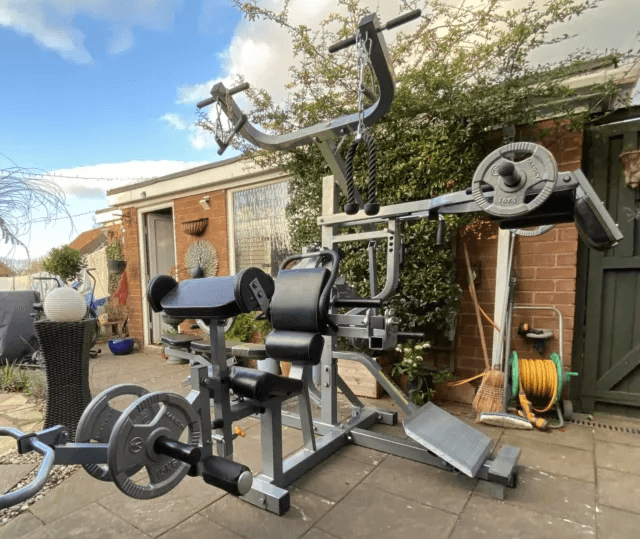
What exercise can be performed with the machine
Leg extension
Adjust the Machine: Sit on the leg extension machine with your back against the backrest and adjust the seat height so that your knees align with the axis of the machine. The machine should allow you to comfortably rest your shins against the leg pad, just above your ankles.Position your Legs: Place your feet under the leg pad, with your toes pointing forward. Your knees should be bent at a 90-degree angle. Hold onto the handles provided on the sides of the seat for stability.
Perform the Movement: Engage your quadriceps muscles (front of the thigh) and straighten your legs by extending your knees. Exhale as you extend your legs, pushing against the resistance of the machine. Extend your legs fully without locking your knees, but avoid hyperextending them. Focus on maintaining control and a smooth, controlled movement throughout the exercise.
Return to the Starting Position: In a controlled manner, slowly lower the weight and bring your legs back to the starting position, bending your knees and allowing the leg pad to return to the initial position. Inhale during this phase of the exercise.
Important Tips:
Maintain proper posture throughout the exercise, keeping your back against the backrest and your core engaged.
Focus on the quadriceps muscles by consciously contracting them during the leg extension movement.
Avoid using momentum or jerking movements to lift the weight. Perform the exercise in a slow and controlled manner.
Leg curl
Adjust the Machine: Sit on the leg curl machine with your back against the backrest and adjust the seat height so that your knees align with the axis of the machine. The leg pad should be positioned just above your ankles.Position your Legs: Position your lower legs under the leg pad, with the pad resting just above your heels. Ensure that your knees are aligned with the axis of the machine. Hold onto the handles provided on the sides of the seat for stability.
Perform the Movement: Engage your hamstrings (muscles on the back of the thigh) and flex your knees, curling your lower legs towards your glutes. Exhale as you curl your legs, pushing against the resistance of the machine. Focus on contracting the hamstrings and avoid using momentum to lift the weight. Keep your upper body stable throughout the exercise.
Squeeze and Hold: At the top of the movement, when your legs are fully flexed, squeeze your hamstrings for a brief moment to maximize the muscle contraction.
Return to the Starting Position: In a controlled manner, slowly lower the weight and extend your legs back to the starting position, straightening your knees and allowing the leg pad to return to the initial position. Inhale during this phase of the exercise.
Important Tips:
Maintain proper posture throughout the exercise, keeping your back against the backrest and your core engaged.
Focus on the hamstrings by consciously contracting them during the leg curl movement.
Avoid using momentum or jerking movements to lift the weight. Perform the exercise in a slow and controlled manner.
Single leg extension and leg curl
The single-leg extension and single-leg curl exercises are variations of the traditional leg extension and leg curl exercises, but they are performed one leg at a time, offer similar benefits to their traditional counterparts, but with the added advantages of targeting muscle imbalances and engaging core muscles for improved stability. Including these exercises in your lower body training routine can help you develop balanced leg strength, stability, and overall muscular development.
Hip thrust

Position Yourself: Sit on the floor facing the leg curl machine with your upper back against the leg pad. Your feet should be flat on the floor, hip-width apart, and your knees bent at approximately 90 degrees. Then you could perform hip thrust by the leg curl machine
Important Tips:
Adjust the seat position or angle of the leg curl machine to find the most comfortable and suitable setup for performing the hip thrust.
Keep your weight centered over your heels throughout the movement.
Maintain proper alignment of your knees, hips, and shoulders throughout the exercise.
Focus on squeezing your glutes at the top of the movement to maximize glute activation.